Today, we're more aware of environmental issues, so we're constantly trying to improve the way we deliver what's really important to the planet. We strive to make our homes more sustainable and our habits less harmful. The first step is to switch from plastic bag to
biodegradable garbage bag.
Biodegradable garbage bags help you reduce your environmental footprint.
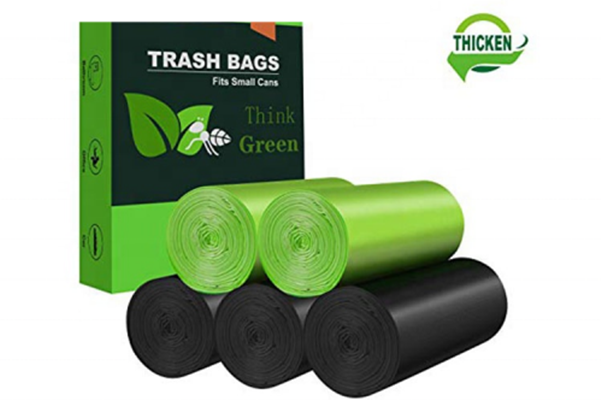 Biodegradable garbage bags can save you money
Instead of collecting plastic grocery bags as a hobby that's not only inconvenient, expensive, but bad for the planet, try reusable, biodegradable grocery bags. You can save a lot of money by choosing
biodegradable shopping bags instead of single-use ones. Not only do you reduce the total amount your community must spend on cleaning each year, but you also reduce the amount of non-renewable resources required to produce plastic bags. Given that the average time a plastic bag is actually used is only 12 minutes, it's not hard to imagine how many bags need to be removed from the streets.
To steer customers in the right direction, many stores are charging more for plastic bags than they used to. You can end up saving money by packing your own biodegradable shopping bag every time you go shopping.
Not all stores charge extra for plastic bags, and some are taking a different tack. You'll be pleased to know that some of them offer discounts or other incentives to carry their own bags. So instead of punishing the behavior they wish to prevent, they reward environmental behavior.
Not only can you save money, you can also save a lot of storage space. Take some time to think about it. If you bring home three shopping bags a week, you will collect 156 bags in a year. And that's just on groceries. Bags take up a lot of space in your home, car, and work space. You can use that space for more important things. In this way, you will have taken a satisfying step towards reducing your environmental footprint.
How long does it take a biodegradable garbage bag to decompose
The time it takes a
biodegradable garbage bag to decompose depends on different factors, such as temperature, humidity and humidity. Taking this into account, the average decomposition period is three to six months. By contrast, traditional plastic bags take hundreds of years to decompose completely. Although all plastics are biodegradable at some point, this process takes many years. Conventional plastics are made with chemicals that bacteria can't consume. As a result, they do not break down or biodegrade easily. A plastic bottle can take up to 450 years to decompose in a landfill.
When it comes to biodegradable plastics, the time it takes to decompose is where the bag ends up. The only way to ensure that a material completely disintegrates is to ensure that it ends up in a place that provides the right conditions. Also, consider the extra time required for decomposition in a landfill compared to an open environment. It must be remembered that there are also places where biodegradable plastic bags are not suitable, such as the Marine environment. If these environmentally friendly products end up in the ocean, they may still be harmful to the ecosystem.
While it's easy to ignore the environmental impact of plastic bags and refuse to change our harmful habits, switching to
biodegradable garbage bag is a relatively simple conversion that can minimize the need for and waste of plastic items. So switching from your plastic bags to
biodegradable garbage bags is the first step to living green.
John Dickson
Paper products developer
Focus on developing paper product research solutions and analysis reports
Click to contact me

 Paper Package
 Paper Package
 Biodegradable Tableware


 3978
3978 26
26





 (Saudi Arabia) Submit Demand 45 Minutes Ago
 (Australia) Submit Demand 25 Minutes Ago
 (United Kingdom) Submit Demand 36 Minutes Ago
 (Sweden) Submit Demand 15 Minutes Ago